
Machines change.AI should adapt.
Changing loads and scarce fault examples challenge static models. Our first Physical AI pilot path explores local adaptation and shared experience.
Normal is not fixed.
Sound, vibration and temperature change with speed, load and environment.
Monitoring needs operating context to distinguish a new mode from deterioration. Especially when labeled failures are scarce.
Development / Pilot validation
From unusual signals to useful foresight.
- 01
Anomaly detection
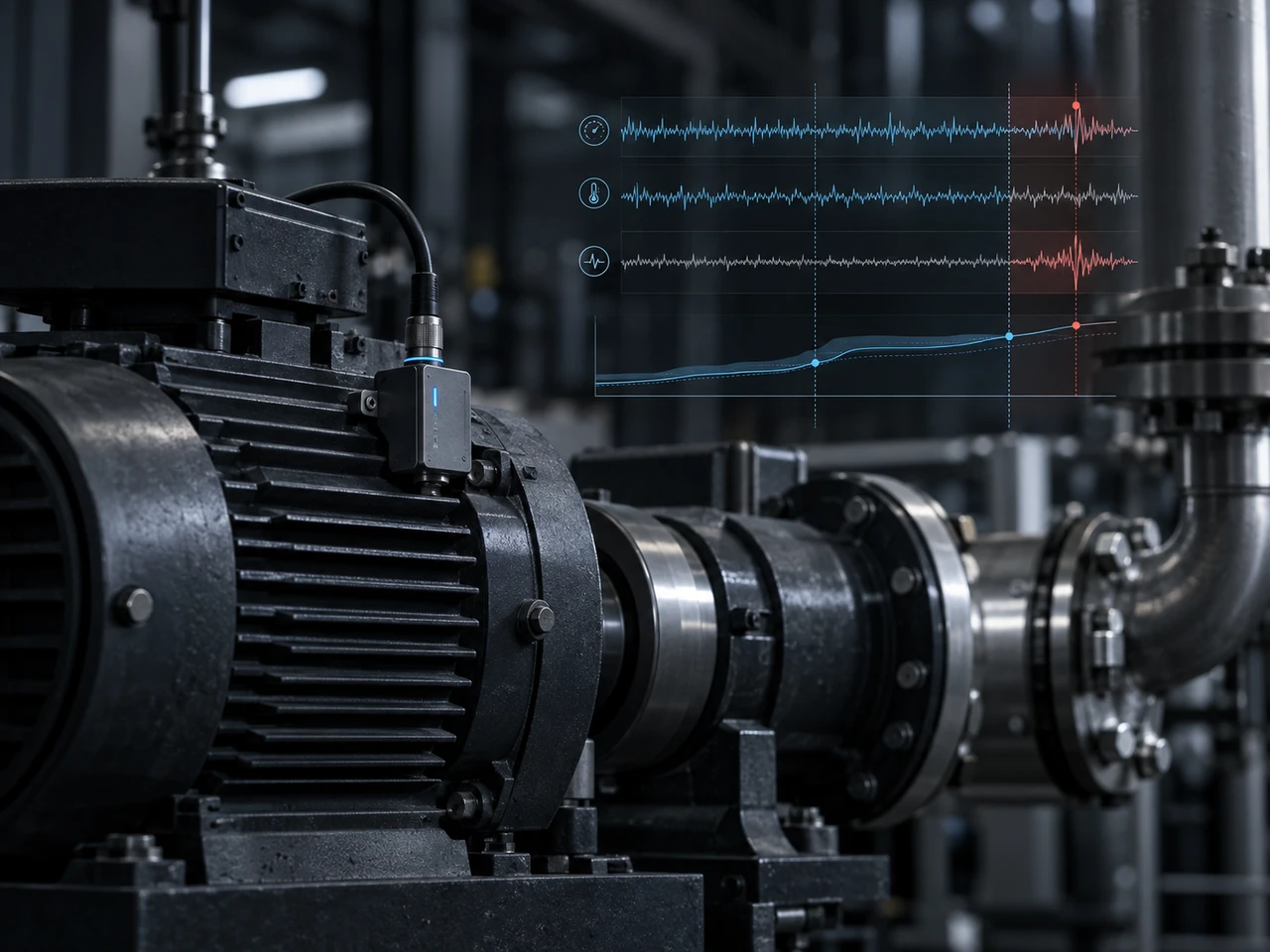
A spike departs from learned behavior. Flag the unusual signal. It is not automatically a fault diagnosis.
- 02
Condition monitoring
A sustained shift coincides with higher load. Add operating context and maintenance observations to track condition over time.
- 03
Predictive capabilities
The dashed extension asks what might follow a trend. Test forecasts only with sufficient history to predict remaining useful life.
A practical next step
Explore a condition monitoring pilot.
Plan a focused evaluation around available sensor signals, operating conditions and machine history. Agree on task-specific criteria such as false alarms, detection sensitivity and robustness.